Oman, a canyon trek and the places around it
From swimming towards a hidden waterfall to mountain valleys, Nizwa’s fort and souq, Muscat’s arches, and a memorable plate of meatballs.
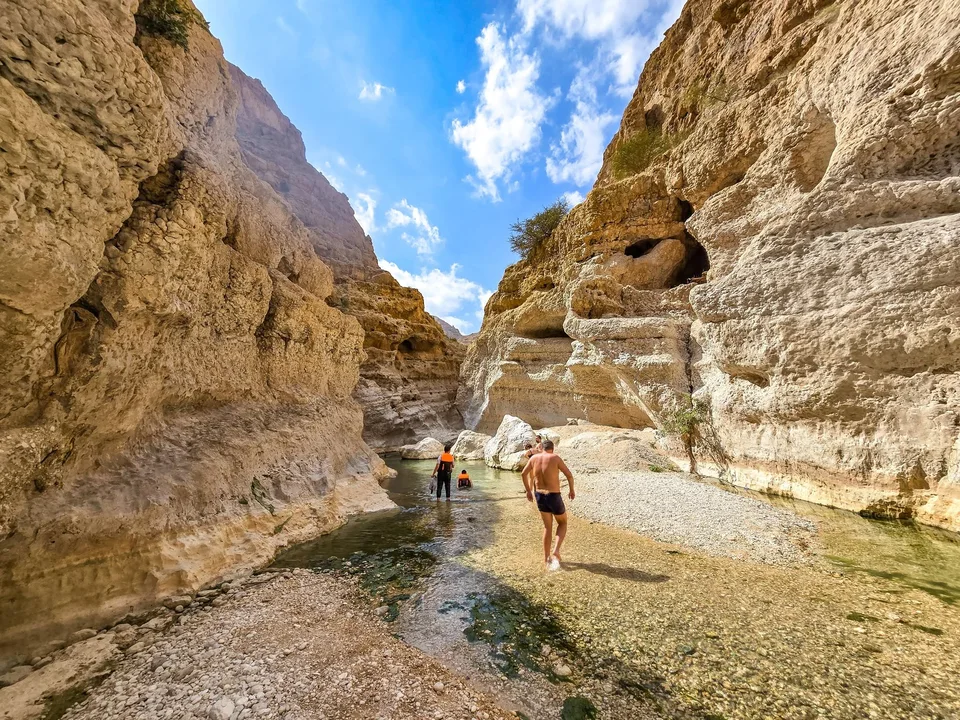
The part of Oman I described most enthusiastically was also the part I could not fully photograph. Wadi Shab ended with a cave and a waterfall, beyond a journey that involved a boat, hiking and swimming. I called it “One of the most amazing treks I’ve had!”
The journey also took in mountain valleys, Nizwa’s fort and souq, the ruins at Birkat Al Mouz and several sides of Muscat. These are the places from the album, followed by the food that earned its strongest verdict.
Wadi Shab
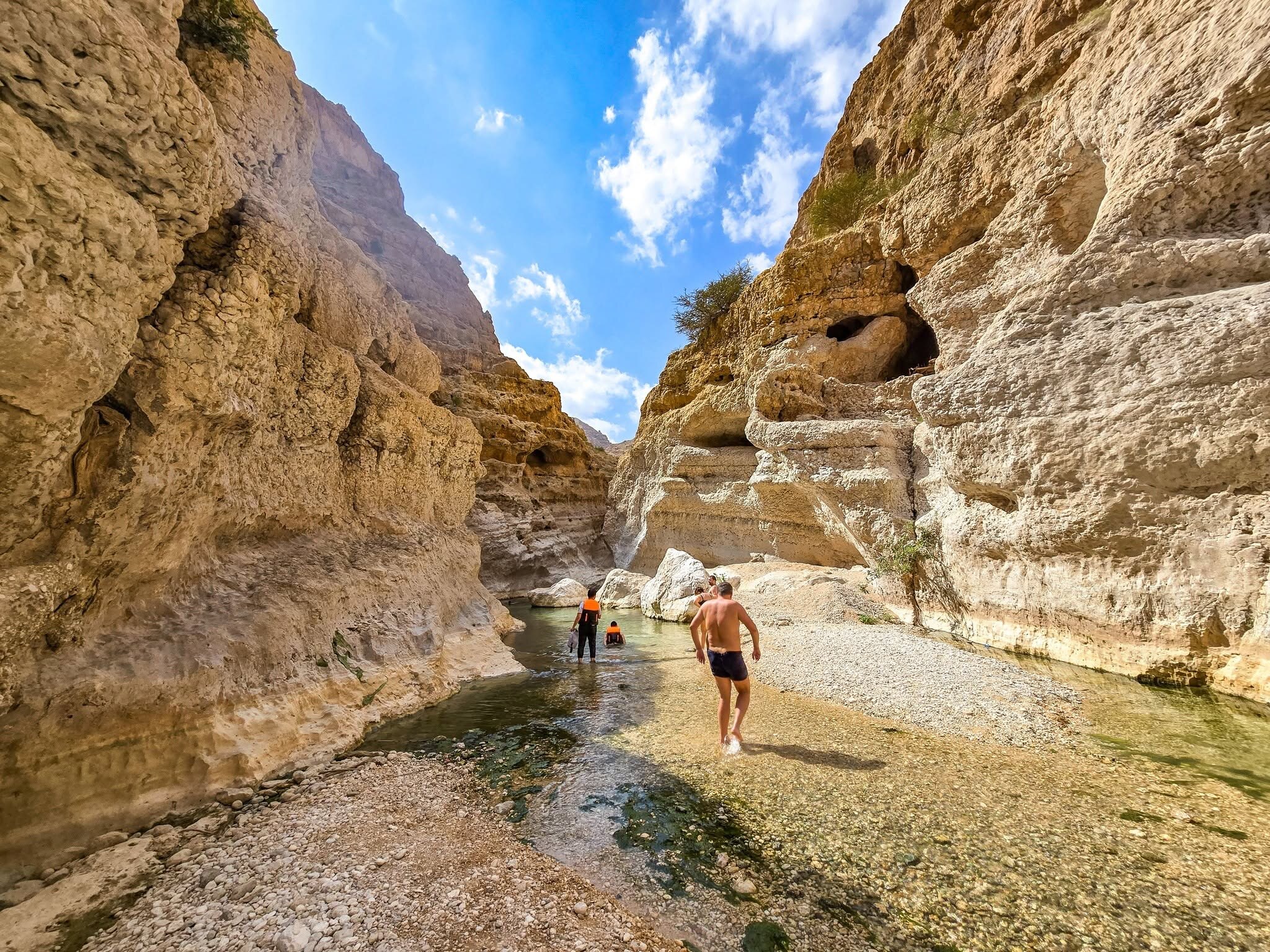
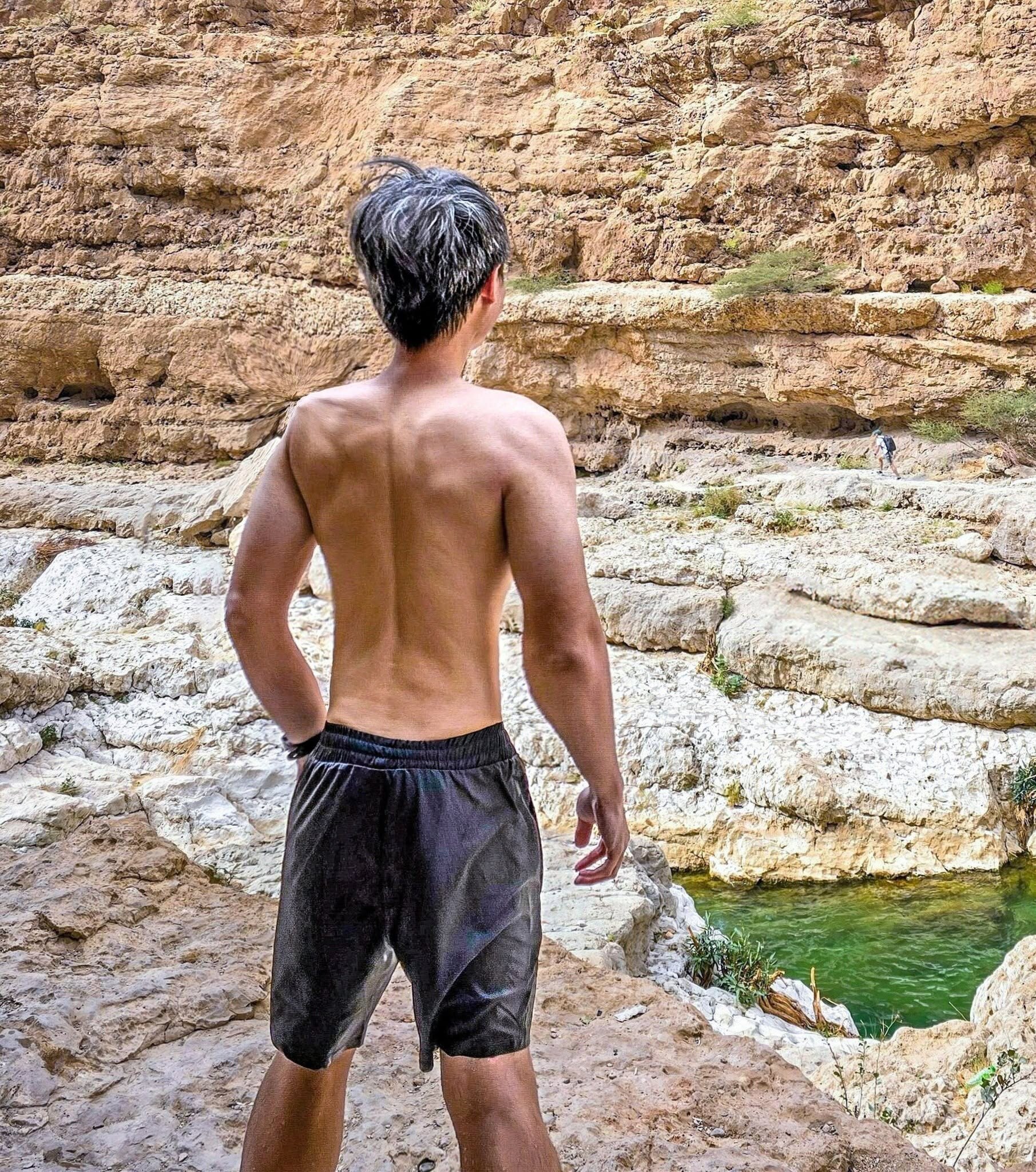
We began the Wadi Shab journey with a boat crossing, then alternated between hiking and swimming through the pools. I put the whole journey at around three hours. Tall, layered canyon walls hemmed in the water, with open stretches of shallow stream between them.
Towards the end, we entered a cave with a waterfall. I could not photograph it because of the visibility. That hidden finish was part of what made this one of the most amazing treks I had done.
Jebel Akhdar
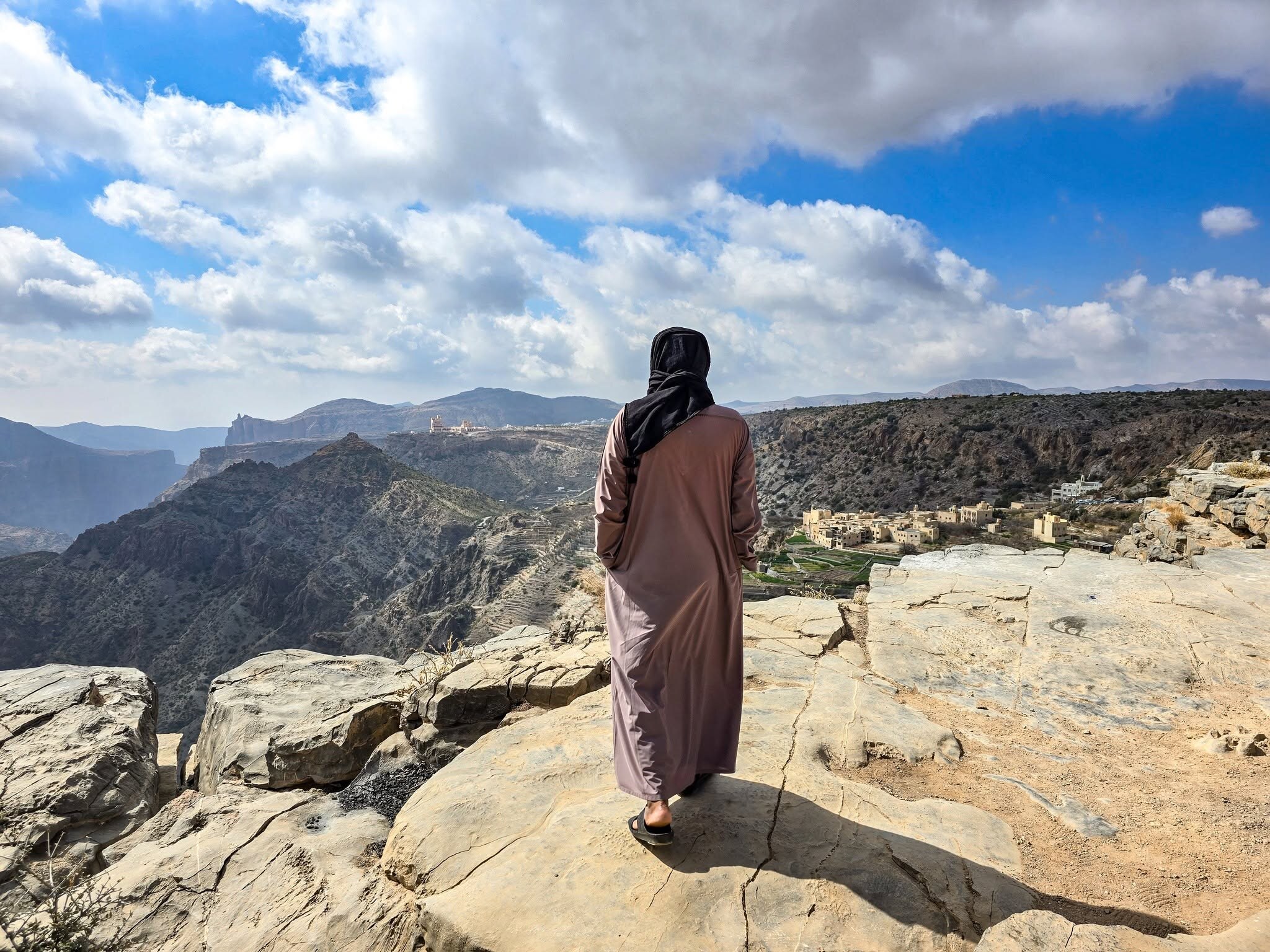
Jebel Akhdar offers a much broader view. A figure stands on a rocky ledge above valleys and ridges, with small clusters of buildings across the slopes. Clouds gather overhead, while the distant mountains fade into blue. Where Wadi Shab places the visitor between rock walls, this landscape opens out across them.
Birkat Al Mouz
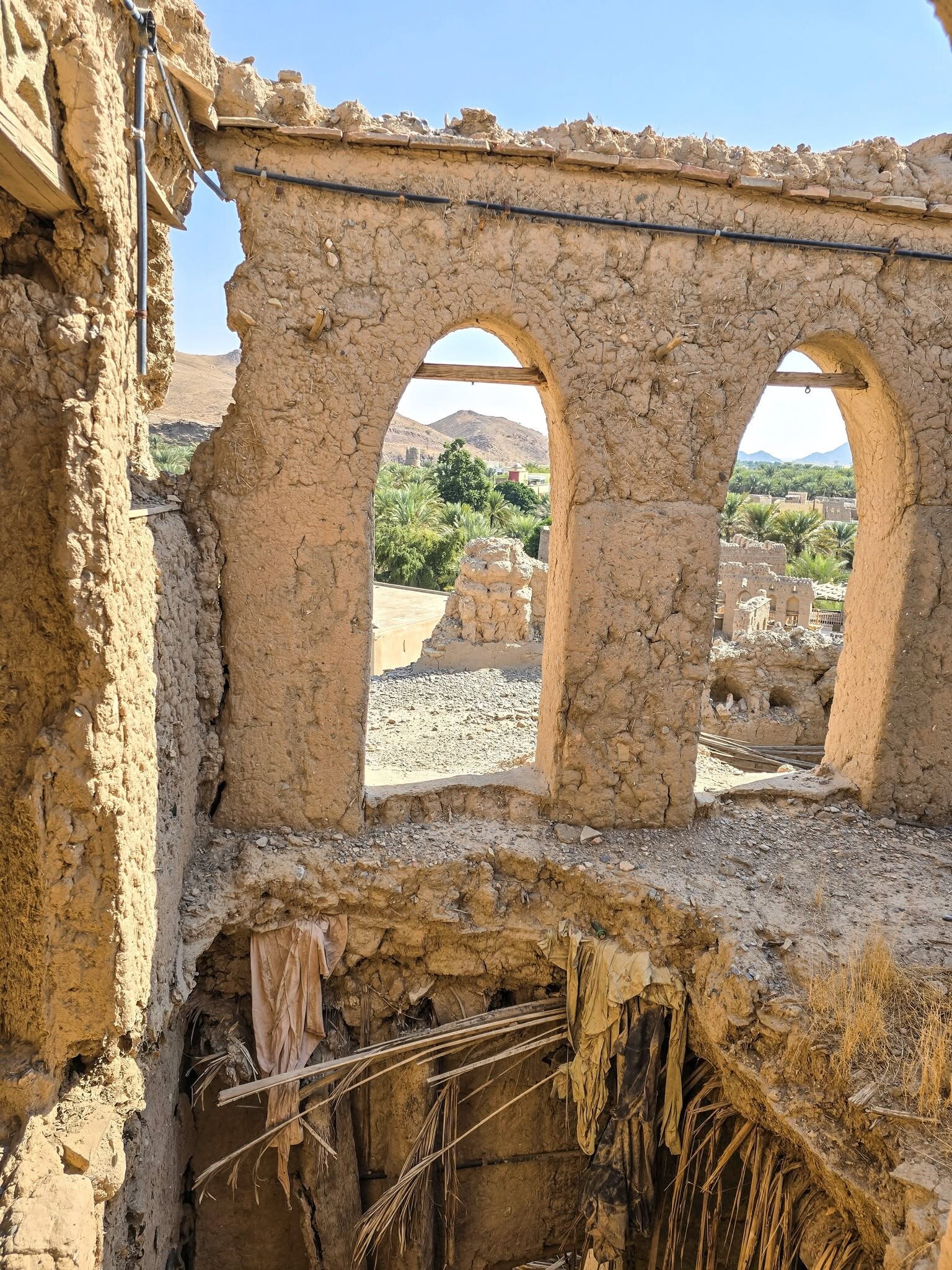
At Birkat Al Mouz, the ruins bring the view back inside a building. Two pointed arches remain in a weathered wall above broken timbers and exposed stone. Through the openings are palms and more buildings. The surviving walls give the old rooms a recognisable shape, even where floors and roofs have fallen away.
Nizwa Fort
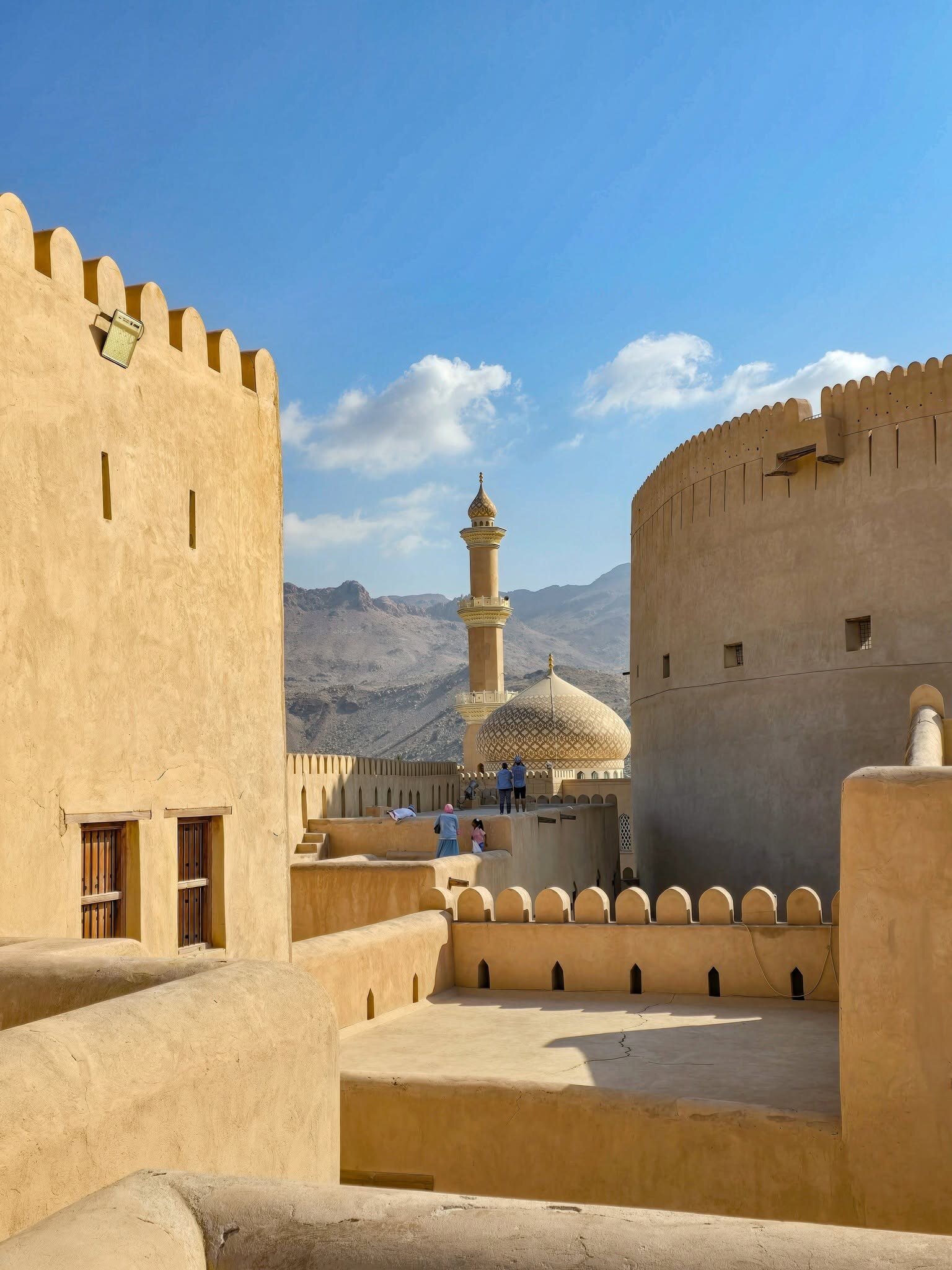
Nizwa Fort has a very different presence: substantial walls, curved towers and rows of battlements. The fort dates to the seventeenth century, and its defensive purpose is plain in the mass of the building. Between the walls, a mosque dome and minaret appear against the mountains. Architecture and landscape are packed closely together here.
Nizwa Souq
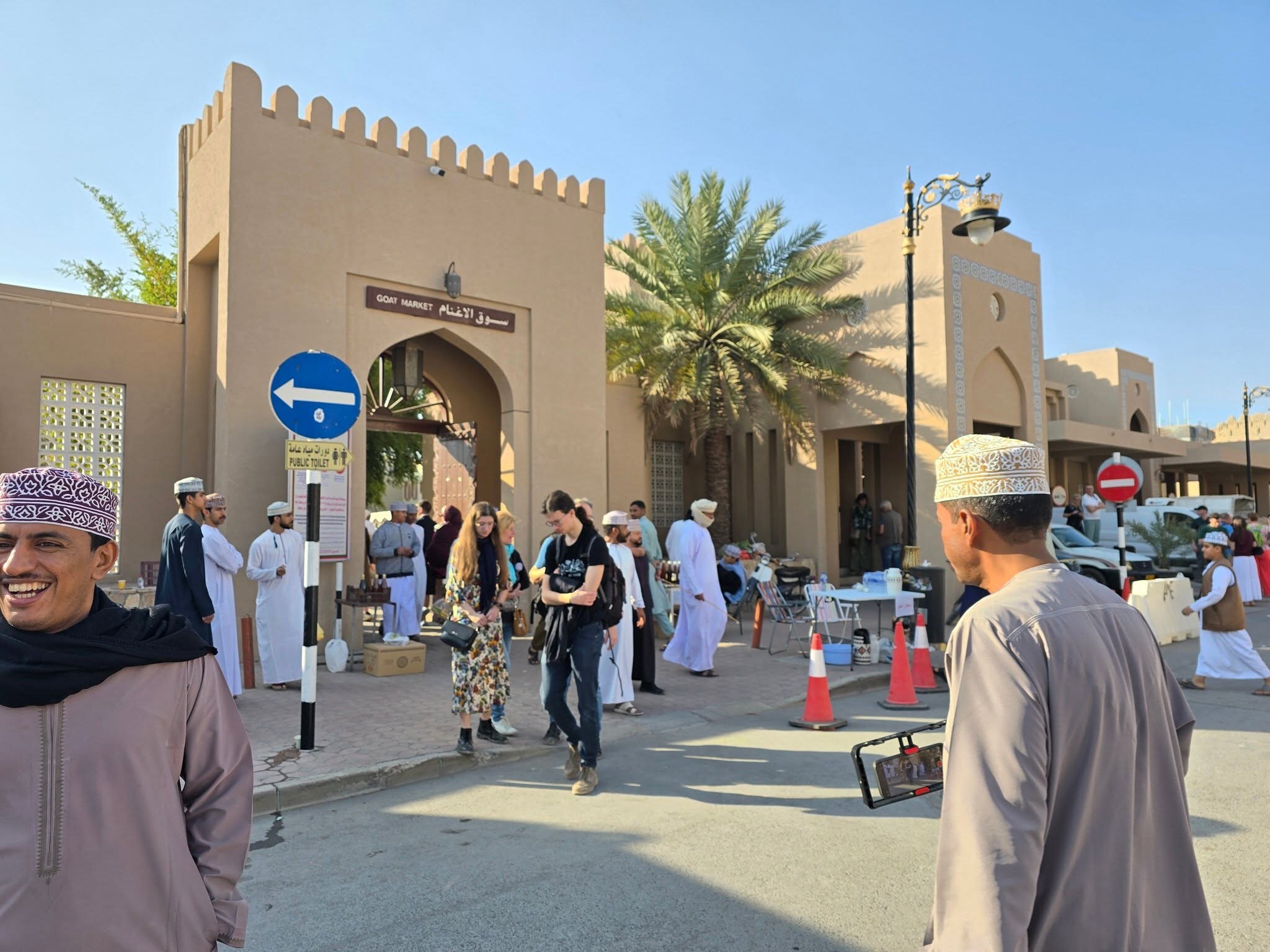
The Nizwa Souq photograph is full of people near an arched entrance, with palms rising behind the walls. Visitors pause, pass one another and gather by the gateway. Traffic signs and parked vehicles sit alongside the crenellated buildings. The market belongs to the working town as much as to the sightseeing photographs.
Sultan Qaboos Grand Mosque · Muscat
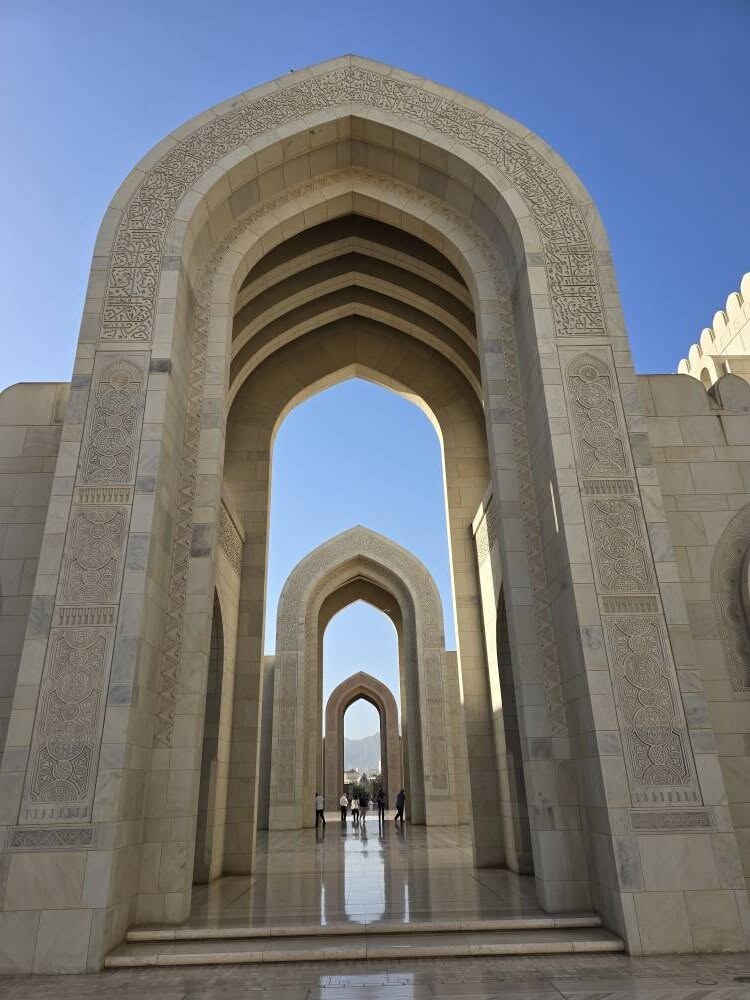
In Muscat, Oman’s capital, the Sultan Qaboos Grand Mosque offers a long alignment of pointed arches. Pale carved surfaces surround openings filled with blue sky, and the polished floor reflects the passage below. Small groups of visitors stand farther along the walkway. The decoration is intricate, but the repeated arches give everything a clear order.
Mutrah Souq · Muscat
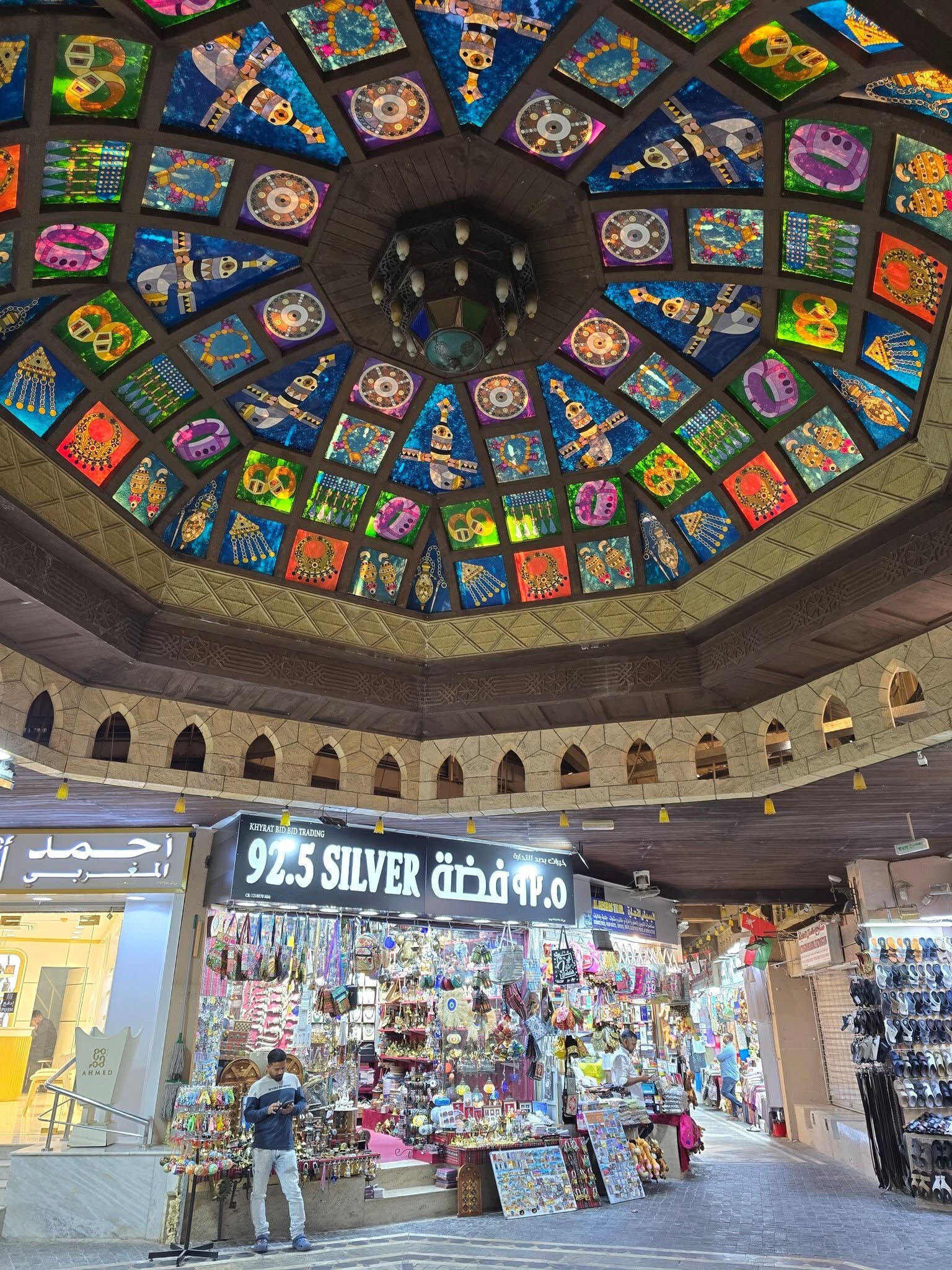
At Mutrah Souq, colour arrives overhead. A patterned stained-glass ceiling spreads above the shops in rings of blue, green, yellow and red. Jewellery and other goods fill the illuminated displays below. I found the vendors friendly and unpushy on my visit, an impression that earned its own place in the caption.
Al Mouj · Muscat
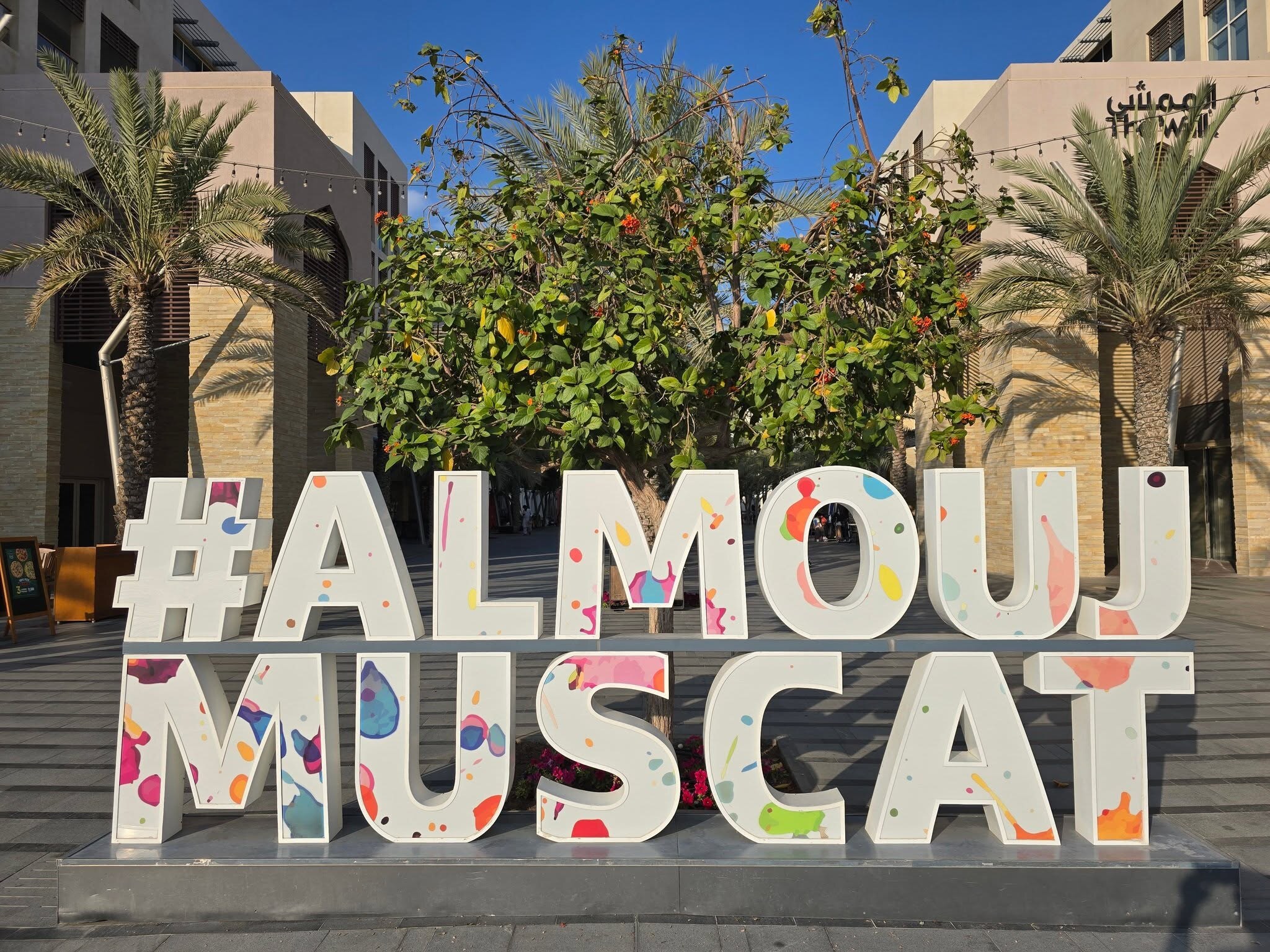
Al Mouj adds a contemporary setting to the Muscat photographs. Large white letters spell out its name, filled with splashes of colour, while palms and angular buildings stand behind. My caption compared it to Sentosa Cove. The photograph keeps the scene simple: planting, clean-edged buildings and a sign made for stopping beside.
Meals from the Oman trip
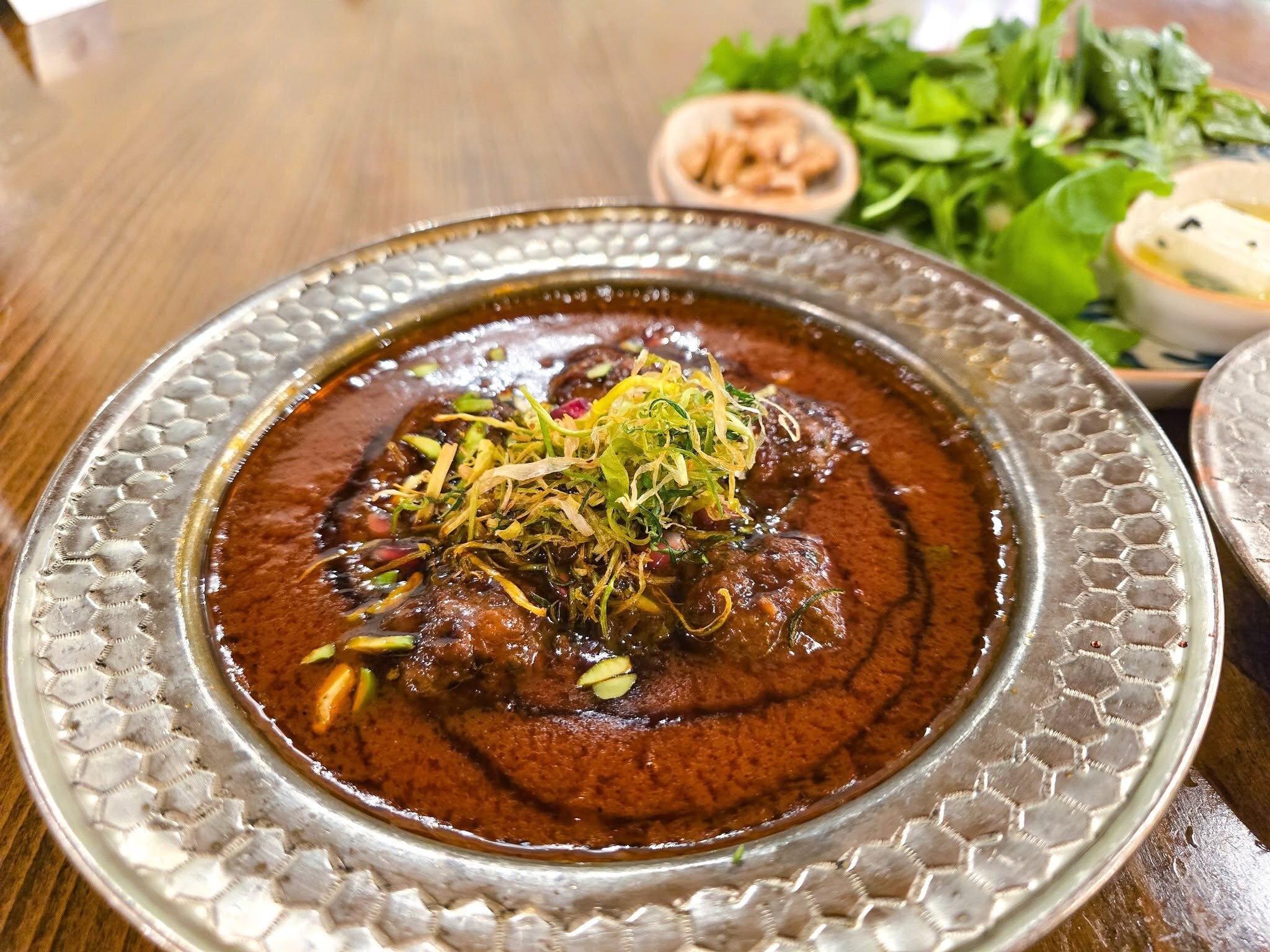
Koofteh Anar earned the clearest endorsement in my food notes. These Iranian meatballs in pomegranate sauce were “INSANELY GOOD!” They arrived in a dark sauce on a broad silver-coloured platter, with a mound of garnish and greens alongside.
My food album ranged across Iranian, Egyptian, Palestinian, Filipino, Afghan, Omani, Qatari, Turkish and Iraqi dishes. Iranian food was the standout in those notes. The Koofteh Anar photograph preserves a particular plate behind that enthusiasm.
The trip had its grand buildings and wide landscapes, but a trek and a plate of meatballs prompted the most emphatic words.